Sunday, May 28, 2006

Reserved for Politics

Edited & Brought to you by ilaxi

Byline by MJ Akbar: Reserved for Politics
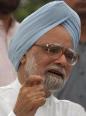
I wonder if Prime Minister Manmohan Singh realises how effectively he has maimed the legacy of Finance Minister Manmohan Singh by an ill-intentioned reservation policy that seeks to restore the primacy of political manipulation over rational economic evolution. The British protected their empire by the effective use of a Roman principle of political management: divide and rule. The British divided Hindus and Muslims in order to survive. Dr Manmohan Singh’s government is pouring acid on the divisions of Hindu society in order to protect its power.

Caste is a fact in India; casteism is an evil. There was early recognition of this evil when the basic structures of a modern Indian state were being established by the generation that won us freedom from the British. Coincidentally, I am writing this on the day Jawaharlal Nehru, a Brahmin who challenged the inequities of Indian society, died. Nehru understood the need for affirmative action. But none of these terms — caste, casteism or affirmative action — is a stagnant reality.

Nehru, and the Constituent Assembly, followed their leader and mentor, Mahatma Gandhi, and extended affirmative action to those who had suffered the greatest injustice, the Dalits. They did not raise the bar to the Backward castes. Was Nehru an enemy of the Backward castes? He dreamt of and founded the great institutions that have become the pride of India all over the world. Reservations were not an unknown concept: why didn’t Nehru, or his daughter Indira Gandhi, allot half the seats in educational institutions for select castes? You cannot accuse them of being indifferent to India or its realities. In fact, the inequity was much worse sixty years ago, and thirty years ago, than it is today.

But Nehru and Indira Gandhi knew that, if it is to succeed, social policy in a democratic polity must be held together by reason and consensus. When there is reason, policy is reasonable; when it is reasonable, there is consensus. Casteism, and the domination of the upper castes, was much, much worse in 1950 and 1967 than it is in 2006. But there was no anger when reservations were made into law in 1950. The upper castes that would not permit the shadow of a Dalit to cross their path suppressed their bloated egos and kept their mouths shut. Reservations were accepted as a necessary step towards a better India. Today, excess is on the verge of destroying the necessary. Reservations are now the interest — collected by pick pocketing the future of India — paid by politicians for loans from their vote banks.

Students and doctors are out on the streets not because they reject the need for social justice. They are out because politicians are stealing the future of the young in order to preserve the power of the old.

Does Dr Manmohan Singh understand why these young men and women have suddenly become so disillusioned with him? It is because Dr Singh gave them their most recent illusion. He promised the young release from the shibboleths and knots that had curdled India for too long.

A child who was five in 1991, when Dr Manmohan Singh became finance minister and guardian of economic reform, is twenty today. He, and, thank God, she, have grown up in the belief that India won political freedom in 1947 and discovered economic freedom in 1991. Perhaps the latter could not have come earlier. It needed the confidence of a state that had been able to protect its political independence against the encroachment of neo-colonisation. It may also have needed the failure of theories like state-entrenched socialism. It was certainly spurred by the humiliation of Indian gold reserves being placed in hock to London bankers to maintain foreign exchange liquidity. Since then, through the vicissitudes of democracy, Dr Manmohan Singh has represented a virtue that has disappeared from politics: integrity. He was the true hero of the new Indian dream. There is heartbreak on the campus. Arjun Singh cannot be the source of any disillusionment because who could possibly have any illusions about him?

The true tragedy is that Dr Manmohan Singh’s economic reforms were, imperceptibly, beginning to heal sordid divisions like caste by luring the young towards an urban mindset. Government is not the only source, or catalyst of change, a proposition surely endorsed by Dr Singh. I would argue that market-driven urbanisation has done as much to obliterate the worst elements of casteism as any law passed by Parliament. Check out the BEST metaphor: it might be a weak attempt at a pun, but it is useful. When a Mumbaikar gets into a public bus (run by BEST) does he worry that the person he is rubbing against might be a Dalit? How do you recognise a Dalit in Mumbai? You don’t. Caste flourishes in the frozen geography of a village, since areas are allotted by caste.

There seem to be worse dangers ahead as this government wilts under the pressure of militant Cabinet ministers with a single demographic support-base and rising ambitions. The constituency needs of Meira Kumar and Ram Vilas Paswan could end up holding the government, and then the country, hostage. Both are telling the private sector, via television (which also informs their voters) that it is only a matter of time before there are reservations in their factories. This is always accompanied by a threat: or else.

Muslims started the politics of reservations, long before Independence, demanding their own seats in legislatures. The British were only too happy to concede to such logic. The Congress argued that community-based reservations were only a prelude to a division of the country, and when Pakistan was formed this argument seemed to have made its point. However, the Congress accepted this logic for Dalits, presumably on the grounds that Dalits were, socially and economically, far worse than Muslims. Implied, but never stated, was the confidence that no other community would extend an economic demand to partition.

The tension is churning out the innumerable contradictions in a policy line that refuses to adapt itself to new realities. Statistics are a much more sophisticated science than they were in 1950, as is demographics. It is possible now to take affirmative programmes towards those below the poverty line, rather than return to the bane of India, the caste line. It amazes me that a government headed by an economist refuses to consider this option. There would not be a murmur from students if an economic criterion were applied. An economic criterion has justice on its side; a caste criterion merely politics.

One of the more interesting facts about the anti-reservations agitation is the significant presence of Muslim students. These students have broken through powerful barriers of discrimination in order to reach where they are. Everyone in six decades of politics has come to Muslim doors for votes, but there is no quid pro quo; no one has given them an assured percentage of jobs or a place in educational institutions. The Manmohan Singh government may consider itself the paradigm of secularism, but it does not talk of reservations for underprivileged Muslims. (As statistics prove, the inclusion of Muslims in certain Backward castes is nothing but a hoax.) Those Muslim students who are becoming young doctors and managers are proof that there are other methods by which discrimination can be challenged. They are also painfully aware that when you divide Indians, you run the danger of dividing India.

Economic reform was beginning to unite the young. Politics is once again turning a crack into a chasm.

Sunday, May 21, 2006

Redress Code

Edited & Brought to you by ilaxi

Byline by MJ Akbar: Redress Code


A Da Vinci week should be a good one for rumination.

One of the most exquisite passages in the New Testament is the eighth chapter of St. Mark. A crowd of some 4,000 — astonishingly large, and soon to be astonished — had been following Jesus (Peace be upon him) for three days, without having eaten. The compassionate Prophet wanted to feed them. His disciples had only seven loaves and two fishes. Jesus offered thanks to God, and there was enough food for everyone. Jesus’ miracles were never ostentatious. When he cured a blind man at Bethsaida by rubbing over the victim’s eyes, Jesus told the fortunate man: "Neither go into the town, nor tell it to any in the town". At Caesara Philippi, Jesus asked his disciples, "Whom do men say I am?" Some compared him to John the Baptist, others to Elias; all agreed he was a Prophet.

Jesus turned the question around to his disciples: "But whom say ye that I am?" Peter answered: "Thou art the Christ."

Jesus "charged them that they should tell no man of him", for "the Son of man must suffer many things, and be rejected of the elders, and of the chief priests, and scribes, and be killed, and after three days rise again." Then followed some of the most moving words in the literature of any faith: "For whosoever will save his life shall lose it; but whosoever shall lose his life for my sake and the gospel’s, the same shall save it. For what shall it profit a man, if he shall gain the whole world, and lose his own soul?"

There is a key phrase: "Son of man". Jesus repeats the phrase in the last verse of the chapter: "Whosoever shall be ashamed of me and of my words in this adulterous and sinful generation, of him also shall the Son of man be ashamed, when he cometh in the glory of his Father with the holy angels".

One of the fundamental differences between the brother-faiths, Islam and Christianity, is that while the Church believes that Jesus was the son of God, Islam insists that Jesus was human.

The Quran venerates Jesus, places him on the highest of pedestals and calls him Christ 11 times. Verse 45 of Al-Imran (The family of Imran) says: "O Mary! Allah giveth thee glad tidings of a Word from Him: his name will be Christ (Maseeha) Jesus. The son of Mary, held in honour in this world and the Hereafter and of (the company of) those nearest to Allah". He is not only a servant of God, and a messenger of God, and a Prophet: in the chapter on Mary (Maryam) Jesus is thus described: "I am indeed a servant of Allah; He hath given me revelation and made me a Prophet." More remarkably, seven times in the Quran Jesus is said to possess the ruh, or spirit, of Allah: "We gave Jesus, the son of Mary, clear signs and strengthened him with the Holy Spirit…" Incidentally, it is perhaps revealing that while the New Testament mentions Mary 19 times, the Quran mentions her 34 times. According to certain interpretations, it is Jesus who will descend to earth a second time, before the hour of judgment. Maulana Yusuf Ali translates verse 61 of Surah 43 as "And (Jesus) shall be a sign (for the coming of) the Hour (of judgment)".

But the Quran categorically rejects the divinity of Jesus, or that he died on the cross and was resurrected; the crucifixion was a "counterfeit": "But they killed him (Jesus, son of Mary) not, nor crucified him, but so it was made to appear to them…" Commentators like Sayyid Ahmad Khan have explained that Christ did not die on the cross, since the piercing of palms and feet is not necessarily fatal, and that Jesus’ body was taken down after three or four hours by his disciples and concealed till he recovered. In Sufi tradition, Jesus is the greatest model of the wandering preacher, particularly during his life after his punishment on the cross. There is even a belief, not substantiated, that Kashmir was the last resting place of Jesus.

But what about the miracle of his birth? The Quran is as insistent as the Bible on the virginity of Mary. But that, says the Quran, does not make Jesus divine. Adam had neither mother nor father, but we do not consider Adam divine. It is up to God, who created us all, to choose the means of His creation.

And of course, the Quran is categorical that Muhammad (Peace be upon him) is the last Prophet of Allah, the "seal" of the Prophets. A traditional saying of Muslims puts it neatly: "Our Lord Abraham is the beloved of God. Our Lord Moses is the voice of God. Our Lord Jesus (Issa) is the spirit of God. But our Lord Muhammad is the Prophet of God."

These are the great issues of faith that divide billions of people who, otherwise, have so much in common. Jews, Christians and Muslims are "people of the Book", owing allegiance to the same God, but differing on the messenger. Islam predates its last Prophet, but naturally, and Muhammad restored the monotheism of Abraham and Moses from which the faithful had so often deviated. There is a lovely hadith, or saying of the Prophet Muhammad: "My brother Moses had only one eye, it was the eye of the law. My brother Jesus had only one eye, it was eye of compassion. God has given me two eyes, both the law and compassion." In other words, society is best ruled through a combination of law and compassion.


What is interesting, in the context of the furore over the bogus Leonardo da Vinci code, is the strong, if often suppressed tradition of what might be called the "human Jesus" within the various strands of Christian belief. Dan Brown is only a terrible writer with a terrific sense of pace who has won an unbelievable lottery. We should not take him more seriously than that. But if he has hit a nerve in these godless times, it is only because the Christian world — or should we say "post-Christian" communities are trying to turn religion upside down. Instead of faith lifting man towards salvation in the after-world, they are pulling down the supernatural into the straitjacket of explicable behaviour. Jesus needs to do explicable things like getting married and having children: how else can he be claimed by a middle class that finds religion to be such a bore? Dan Brown is a graceless, if inevitable, child of Darwin.

The film apparently achieves what the book adroitly avoided: it ends in titters rather than jitters. But the most interesting reaction to the film was surely from those Muslim imams who joined many Christian priests in demanding a ban in India. The imams were following their ethics, for Jesus does not belong to Christians alone. If you demand a ban on a book that slanders Muhammad then it is equally logical that you should demand a ban on a film that slanders Jesus.

Hollywood is the ivory tower of globalisation. Satellite television, freer trade and increasingly unipolar tastes may be turning the world into a single marketplace. But it is not yet a market without exit routes.

Sunday, May 14, 2006

Step Forward

Byline by MJ Akbar:Step forward,Buddha Babu

We must not lose what we have achieved through economic reform. But it is equally true that the next phase of economic growth is going to be impossible without a far greater commitment to equity and social change.


Buddhadeb Bhattacharjee has buried the ghost that hovered over Jyoti Basu’s table for two decades — that his remarkable run of victories was tainted by rigging. It was an easy accusation to make, and an easier one to believe outside Bengal, precisely because India had never witnessed anything like the democratic miracle engineered by Basu and the CPI(M). The facts of course did not quite justify the accusation. Marxist support was anchored in solid economic benefits for the underprivileged, and lifted by the unique charisma of Jyoti Basu, a charisma that magnetised the Bengali voter. But it was the only accusation that a hapless, and then a hopeless, Opposition could make.

This charge was essential to the self-esteem, and therefore survival, of the Congress and its truculent child, the Trinamul. Without self-esteem you cannot offer hope; without hope, you cannot have a cadre. Mamata Banerjee can sustain her individual self on a diet of negative and near-hysterical cacophony. But why should the young, or even the old, person in search of a political career invest in her if all she can offer is forty years in the wilderness?

It is a fair bet that, after Moses, the Congress family in Bengal is the only leadership that offers forty years in the wilderness and hopes to survive. The journey to nowhere began in 1977. For 29 years the Congress family has been staring at a lost horizon. Buddhadeb Bhattacharjee has now set course for at least another eleven years. We shall check horizons again after the elections of 2016.

And Buddhadeb Babu has done it in style. The Election Commission pulled out all the stops in its determination to prevent any rigging. This election was as clean as it gets. The results were as overwhelmingly one-sided as possible. The difference was so huge that even the opinion polls could not get it wrong. Every government tries to use state machinery to its advantage, but no government has been able to change the course of a tide.

Buddhadeb Bhattacharjee’s great achievement is that he corrected the course of the tide when he found that it just might go the other way, and set about this task almost from the moment he inherited Basu’s extraordinary legacy. He introduced the dialectic of change into Marxist terminology. Like any Marxist, he is a child of ideology, but he rescued dogma from dogmatism.

He was ahead of the youth curve.

The biggest danger for any establishment is to run adrift of the shifting perception of the young. Every generation rewrites the rules of economic aspiration, within the context of new technology and emerging opportunity. Buddhadeb Bhattacharjee saw the future in the Chinese model, but not quite in the way we imagine. There was a subtle variation, even as he understood that Communism had to integrate with market forces. He realised that the Chinese Communist Party could survive a Tiananmen Square because the system was essentially despotic. But in a democracy such an upsurge would have been sufficient to unseat a government in the subsequent election. His responsibility and challenge therefore was to prevent disillusionment, and ease the anger of the young before it erupted.

He did not succeed in isolation, as is sometimes made out to be. He was not a voice outside the party’s Politburo. The CPI(M) is now led by younger men and women with a vested interest in the future. And they are going to find that future with the steely determination of the generation that has provided them with an invaluable legacy. Till yesterday, Buddhadeb Bhattacharjee was a chief minister of Bengal. Today he has become a leader of his people.

Obviously he has been helped by the fact that the Trinamul and Congress had nothing to offer except emotional, non-intellectual and often unintelligible mishmash. Mamata Banerjee is the headmistress of the tired school of clichés. She confuses street theatre with politics. Bengalis may love jatra but they don’t vote for drama queens. And as drama queens go, Mamata Banerjee is no Suchitra Sen.

But she also emerges from a political tradition in Bengal. Marxist historians must never forget to thank three Bengalis for the rise of the CPI(M): P.C. Sen, Ajoy Mukherjee and Pranab Mukherjee. Sen was Congress chief minister after Dr B.C. Roy, and led his party to defeat almost as surely as Dr Roy led his party to victory. Sen fell in the elections of 1967 to a United Front crafted by Ajoy Mukherjee, the ageing Congress rebel, Pranab Mukherjee, the rising young tactician, and Jyoti Basu. (Pranab Mukherjee is an ageing tactician now, but still a tactician.)

1967 marked the beginning of a decade of struggle and trial for the Marxists: through the fires of Naxalite havoc, Congress repression in the state and then the nationwide Emergency. In 1977 the Emergency was lifted and the mood of the north was passionately anti-Congress. Sen, now leader of the Janata Dal, did the Marxists an unparalleled favour. Basu offered an alliance. Sen arrogantly rejected it. The Left Front swept to power in 1977 in Bengal. No one has discovered the means to remove it in three decades.

A historic blunder (the phrase is Jyoti Basu’s) in 1997 prevented the Marxists from taking a quantum leap forward in their political evolution. The CPI(M) Politburo prevented Jyoti Basu from leading a coalition and becoming the first Marxist Prime Minister of India. No party has used power to expand its base better than the CPI(M). Today, the Marxists have been restricted to two and a half fortresses (Tripura would be the half), and only one of those fortresses is under permanent possession (Bengal). With Jyoti Basu in Delhi, the party would have had a unique chance to take its message, as well as its management style, across the country. The results might not have been immediate, but they would have come.

A decade has passed since that historic blunder, and generations have changed. Can Buddhadeb Bhattacharjee and Prakash Karat reverse that blunder?

They have one great advantage, which was not so evident a decade earlier. When Narasimha Rao and Manmohan Singh ushered in economic reforms in 1991, they promised emancipation to all. Their work was carried forward by governments that were hostile to the Congress: the Vajpayee coalition was as committed to those reforms as its originators. In a sense, these policies were endorsed by a Right Coalition, which could have evolved into a Right Front. Fifteen years later, it is obvious to everyone but the blind that economic reforms have been only a partial success. The Maoist insurgency is violent evidence of the despair in the darker side of India — the moonlit India, as opposed to neon-lit India.

We must not lose what we have achieved through economic reform. But it is equally true that the next phase of economic growth is going to be impossible without a far greater commitment to equity and social change. If the first phase of economic growth was sustained by a Right Front, then the next phase will need a non-dogmatic Left Front in power. The poor will not wait much longer. If they are not included in rapid progress then they could even destroy what has been achieved.

The only political party with any credibility among the poor within the democratic ambience is the CPI(M). The Maoists are a splutter of anger, an important alarm bell, but they are not the solution to this growing problem. Their relevance is limited. The CPI(M) can seed a Left Front that re-establishes Delhi’s equation with India.

Step forward, Buddhadeb Bhattacharjee.

Sunday, May 07, 2006

Look before you don’t leap

Edited & Brought to you by ilaxi

Byline by MJ Akbar:Look before you don’t leap

The strife-ridden battleground of Indian politics has entered a phase of curious and paradoxical stalemate: the government is ceding space but there is no one to occupy it. In a sense, the government is losing the battle with itself. There is no one else to lose it against.

This fits in with a standard operating law of Indian politics: no one wins an election but someone loses it. But sequence must not overlap with consequence. We are still in the sequence stage. A wit might add that power is such a con that it takes no time at all to attach itself to sequence.

It is an old joke that the only success ever achieved by a government-appointed committee was the King James 1 Bible. The new, wry and sardonic joke in Delhi is that there is no one left to appoint to any more committees. Everyone is a member of some committee or the other. The ruling class of Delhi has three components: the has-beens, the wannabes, and those stuck in the middle. The has-beens are politicians and bureaucrats who have retired from government. But despite being closer to seventy than sixty, they have not yet tired of power and continue to exhibit an athletic hunger for minor perks and privileges. Even the has-beens, in other words, are wannabes.

Dr Manmohan Singh, the most successful bureaucrat in history, has found the perfect solution to this problem. He has converted governance into hundreds of committees. Tell him about any problem, from Kashmir to a shortage of knitting needles, and a committee is born out of the conversation. It is axiomatic that nothing gets done. But that, presumably, is the point. The point of existence is survival, not service.

It is entirely in character that the most successful bureaucrat in history has become Prime Minister of Delhi after being appointed Prime Minister of India. Dr Manmohan Singh understands Delhi. He is comfortable in Delhi. He knows the dance of the faithful in Delhi: two steps back and one step sideways keep you at a safe distance from trouble. The absence of trouble is the first principle of survival.

The governance of India is a different story and requires a different mindset. India needs a leap of imagination. Dr Manmohan Singh’s motto is simple: look before you don’t leap.

Delhi is not a single fact. There are at least two Delhis, and I am not talking of the old city built by Shahjehan and the new one crafted by Lutyens. There is one Delhi in which Indians live, and another Delhi where the men and women who rule India live. Sheila Dikshit is the guardian of the first Delhi, of real people, and a pretty capable one too. Dr Manmohan Singh is the presiding spirit of the other Delhi: of ministers, bureaucrats, and their service providers, from the humble dhobi to the obsequious magnate.

The Prime Minister of Delhi has extraordinary, even great, virtues. He is, to begin with, ruthlessly honest. Wisely, he never lets his personal morals extend to his ministers, who can be as corrupt as they want to be, as long as they don’t get caught. Dr Manmohan Singh is even more ruthlessly diligent. Prime Ministers normally leave three quarters of the files to their Principal Secretary; Dr Manmohan Singh’s ratio is the opposite. He gives his personal attention to virtually every file. But that is not the virtue needed of a Prime Minister of India, because all problems are not equal. When everything is sought to be done, there is the great danger that nothing might be done. The government of India is structured to look after all problems, which is why it has so many departments. The Prime Minister of India must concentrate his vision on the vital organs that keep a nation in the best of health during his temporary possession of office. At this point of time, the three great priorities should be, at least in my view, security, Naxalites and power.

Each one of these issues could demand twenty hours of work each day. Security means not only the elimination of terrorism and communal riots, but also a mature peace with Pakistan, negotiated with persistence. Instead we have a fits and starts policy. Every so often, without any particular reason or explanation, Kashmir jumps up on the calendar, shapes headlines for a day or two, and then melts away into indifference. There is no engagement. The Naxalites get perfunctory lip service, but in fact are treated like someone else’s headache: as a law and order problem to be dealt with by chief ministers. Power needs massive, concentrated, one-horizon, national and nationwide investment. Instead, the problem has been outsourced to the general managers of power plants. If they can raise output, very nice. If not, tough luck: the golden age of Indian civilisation did occur long before air-conditioning, isn’t it? If Chandragupta Maurya could do without electricity, who are you to complain about power cuts?

If this drift to nowhere has not induced any sense of panic (the panic of the lost) then it is largely because there is no Opposition. Indeed, if any political party displays the panic of the lost then it is the BJP. Those who have become used to positions, take time to adjust to opposition. That much is understandable. But two years? Getting on top of a chariot is not the best method to find your mind. You have to be on top of issues. The other political formations are like the Indians looking at Rumi’s elephant: you can never be quite sure whether it is a water pipe, a fan, a pillar or a throne. "Had each of them held a lighted candle," writes Rumi, "there would have been no contradiction in their words." But illumination commands too high a premium in our befuddled times.

Voters, generally, though not always, are kinder to the Opposition than to the government. If the Opposition is lost, it only hurts itself. If the government is lost, it hurts the people. It is really as simple as that.

Voters have faith and respect for the office of Prime Minister. The Prime Minister is the voice of Parliament, and often the voice of India. A Prime Minister who devalues his office betrays this great trust. The King James Bible does tell us that the meek shall inherit the earth. Indeed they might, and probably should, but it were best if they were kept out of the office of Prime Minister of India. Meek so often blurs into weak.

The temptations of Delhi are magnetic. Let me leave those who prefer Delhi to India with a sobering thought. The Mughal empire never really survived the shift from Agra to Delhi. Shahjehan moved halfway through his reign; and his heir, Aurangzeb could barely hold what he had inherited, as he himself realised on his deathbed. Does the Mughal empire seem too remote? The British announced the change of their capital from Calcutta to Delhi in 1911, but effectively moved in 1931. For more than two hundred years the British had continuously expanded their possessions and their influence, from Burma to Persia, from their base in Calcutta. Sixteen years after the Viceroy of India became the Viceroy of Delhi, the British packed their bags.

The attractions of Delhi can be fatal.

Sunday, April 30, 2006

A Bridge too Near

Edited & Brought to you by ilaxi

Byline by MJ Akbar: A Bridge too Near

If there is the faint sound of a wobble in the Manmohan Singh government, it has nothing to do with the states. The Prime Minister’s credibility has been dribbling away ever since he decided to make the nuclear deal with the United States the central achievement of his government without thinking through the consequences of unsustainable triumphalism, or indeed the nuances of policy-making in Washington. His worst mistake was to hint that opposition to this deal was "communal", since some Muslim organisations had protested against George Bush. Credibility is all he had. If that goes he has little else.


Those who play bridge know that there are two routes to success. Either the combination of 26 cards on your side (13 each with you and partner) matches so well that even a two or a three bring in a trick; or the honours are so dominant that they make the opposition irrelevant. If you have both, of course, then you bid Grand Slam with a smile.

Elections used to be an honours game. The aces — from Jawaharlal Nehru to Indira Gandhi to Jyoti Basu — used to dominate the electoral game. Their charisma was the decisive factor. I was going to use "decisive edge" but it was always far more than an edge.

It is true that Nehru and Indira Gandhi might have won nothing without the broad base of the Congress they inherited from Mahatma Gandhi, and Jyoti Basu would have been merely a brilliant barrister without the party structure created by Promode Dasgupta and his selfless contemporaries, but equally, the Congress and the CPI(M) were sustained by the magnetic leadership of such aces.

The Marxists were sensible enough to appreciate that a combination of distribution and honours was unbeatable. So they retained the United Front even when they had the numbers to rule Bengal alone, and would not let Jyoti Basu retire even when he wanted to. (Not every politician thinks power is synonymous with life.)

But the aces have gone, or left the table; electoral bridge is now a largely distribution game. The allies make the difference, and even the smallest card, with one per cent of the vote, matters.

Few elections have been as fascinating, even breathtaking, as the one being fought currently in Tamil Nadu, because, unusually, everything matters. Our opinion poll, done by ACNielsen, believes that 48% of the vote will go to the alliance led by Jayalalithaa and 47% to her foes, led by M. Karunanidhi. That is a dead-heat, given that the standard margin of error is plus-minus 2.07%. Jayalalithaa personally commands 46% of the vote, but if Vaiko, with 1%, had not switched sides and joined her, the script might have become lop-sided. It is a tribute to Jayalalithaa’s sagacity and character that she never permitted her ego to come in the way of a political alliance: there are leaders in Delhi who could learn a lesson or two from her. She knew the statistics. In 2001 she won 132 of the 234 seats with 31.44% of the vote, and DMK got 31 seats with 30.92% of the vote. A difference of half a per cent in vote share meant a gap of 101 seats in the Assembly. Such are the tyrannies of first-past-the-post system.

The DMK is more dependent on allies than Jayalalithaa. It has 42% support, but is kept in the race by 3% from the Congress and 2% from the PMK. The Left is statistically invisible but has its role in key constituencies.

If the cards on both sides are evenly matched, then it is the aces that will make the difference. Karunanidhi might have made a fatal mistake when he projected his son M.K. Stalin as the face of the future. There was a visible sag in the DMK momentum at the start of the campaign, during the Stalin phase, and it is only when Dayanidhi Maran came into the spotlight did his alliance emerge from the shadows. Irrespective of the results in May, this Assembly election will have marked Maran’s evolution as a leader of his state. If his party does not recognise this, the smile on Jayalalithaa’s face could become even larger.

For she has the clear edge when it comes to personality. All the pointers in the opinion poll confirm this. Her party is four points ahead of the DMK only because of her (since it is a personality-driven business, if her party were to lag, it would also be because of her). She has only two allies; the DMK has half a dozen were anyone to count, and yet she is ahead. It may be a marginal lead, but Tamil Nadu is all about margins that transmigrate into broad sweeps. Two years ago to the month she suffered what was widely advertised as a death blow, losing every single seat in the elections to the Lok Sabha. To revive from that graveyard needed miraculous levels of self-belief and a head as cool as the South Pole.

The key statistic is surely that 90% of those who voted for her in that failed election are still with her, and only 4% have switched to the DMK. In comparison, there has been a switch of 8% from the DMK to her, and the DMK’s retention rate is 86%.

Unusually, both sides have been in power during the last two years. Jayalalithaa of course remained chief minister, while the DMK joined the Union government with key portfolios. Jayalalithaa used power to better public effect than her opponents. 52% of the people think that she has been either a "very good" or "good" chief minister; between 60 and 70 per cent believe that the three basics, drinking water, electricity and road conditions, have improved under her watch, and a clear majority thinks she did good work during the tsunami and the floods. These are the pillars of good governance. Unsurprisingly then, she has the lead among the young. The young poll more heavily than the middle-aged.

So what happens if ACNielsen is right and Jayalalithaa forms the government in Chennai again? A whole lot of nothing, actually. A few hours of genuflection, and life goes back to normal. There is no logical reason for turmoil. The Congress, after two years in power and daily megaphone publicity, will not have increased its vote share anywhere, and slumped in Kerala and Assam. Despite a fractured and unimpressive Opposition, the Congress will probably need a coalition in Assam, turning one more one-party state into coalition country. In Bengal and Kerala, the party remains a lower single-digit fact. So why should parties which have nothing to gain from uncertainty, risk the comfort of power in Delhi? The only partners of the ruling coalition in Delhi to gain will be the Left, which will add a Kerala wing to its Bengal fortress. The Left has no history of deliberately destabilising any of its comfort zones. A cat that gets cream late in life doesn’t believe in nine lives.

If there is the faint sound of a wobble in the Manmohan Singh government, it has nothing to do with the states. The Prime Minister’s credibility has been dribbling away ever since he decided to make the nuclear deal with the United States the central achievement of his government without thinking through the consequences of unsustainable triumphalism, or indeed the nuances of policy-making in Washington. His worst mistake was to hint that opposition to this deal was "communal", since some Muslim organisations had protested against George Bush. Credibility is all he had. If that goes he has little else. It was always a comforting myth that leadership is possible without understanding politics; that this, in fact, might be a virtue. He must be the first Prime Minister of India who would cancel a series of election meetings in a vital state like Bengal in order to attend an economic meeting in Hyderabad. Others would have done both, not one at the expense of the other.

A government is as strong or weak as its focal point. That focal point is blurred. Foreign policy is in shambles. Domestic policy is shooting off in different directions, depending on the predilections of Cabinet ministers.

Manmohan Singh might be a good man, but that, alas, is not good enough reason to be Prime Minister of India.

The Government of India is a pack of cards without an ace.

Sunday, April 23, 2006

A Toast to Your Majesty

Byline by MJ Akbar: A Toast to your Majesty

It’s Friday the 21st of April in England, the sun is jesting with the rain and a faint chant rises from the television screen: "Two ... four ... six ... eight ... who do we appreciate? The Queen!" It is Queen Elizabeth II’s 80th birthday and we are all children now, staring at Windsor Castle.

Sky News, the tough TV channel, has an "exclusive" interview with the Queen’s younger son, Andrew, the Duke of York, and he takes us to an exclusive tour of the mailbox he made when he was nine, and which has been preserved, possibly because it was the most useful thing he has done. A man wearing a paper Union Jack hat tells us breathlessly that he has spoken to the Queen for the 114th time since 1982. He must be the royal version of the English cricket team’s Barmy Army. A schoolgirl who offered flowers to her monarch reveals, once again exclusively, what the Queen told her: "Are they from the garden?" Even the child sensed that there might be something less than adequate in the quote. "And that’s all," she added.

The Queen’s minders were politically correct. Once upon a time, many history books ago, the monarch of Great Britain had all the colours of the world among her subjects. The Queen of Britain still has all the colours of the world among her subjects, but they all live in England instead of across the globe. The sun definitely sets upon the British empire these days. A black girl in a pretty frock curtseys and presents flowers; children of South Asian origin, on holiday from school, line up among the 20,000 or so who have come to cheer their queen. There are gun salutes at the Queen’s various residences. Since we see them on the small screen, there is a feel of toy guns on doll grass booming across Lego ramparts.

Prince Charles, who has been teased by the cartoonists in the morning papers as the long-suffering heir of the Eternal Mother, pays an impressive tribute, but the theme is mother rather than queen, reinforcing the maternal and bringing the Queen into every mother’s heart. He recalls the child who waited anxiously for mama’s phone calls from exotic countries, a crackle travelling at pre-computer pace and a Marconi tremble. He mentions a vignette: before her coronation Queen Elizabeth tried on her crown to check its weight and size. One doesn’t want to be surprised, even by a crown.

It’s sycophancy, but it is endearing and it works. There is no logic to it, but that is obviously its strength. Does the British monarchy work precisely because it is powerless? Yes, of course. People cannot hate anyone without power, and the British royal family wisely edged away from politics before it could become politics’ victim. Instead of power, it has influence, and it would be foolish to underestimate the depth of this influence.

If only someone could convey this simple fact to the foolish man who pretends to be a king in Kathmandu.

We discussed the mysteries of the charisma over a jolly lunch at a Scottish fish restaurant across the Fitzwilliam Museum in Cambridge. My friend of thirty years, Alexander, was dressed with the careful scruffiness of the British upper class. His elder brother John, who is 78, buys rare books (which he buys from the widows of Cambridge dons) as a hobby and sells them for a modest living, offered a loyal toast. John then explained how to recognise a voice on the telephone that had been outsourced to Bangalore. It was the only one, he pointed out, with a proper upper class British accent.

Last week Alexander was at the funeral of Lady Heskett, widowed at 25, but lived to a grand old age as owner of one of the greatest homes in Britain. Nigel Lawson, former Chancellor of the Exchequer, gave the funeral oration and told a charming anecdote. When Edward Heath, a bachelor, became Prime Minister, he often asked grand Conservative ladies to be official hostess at his weekend retreat when he had important guests. Mrs Indira Gandhi had come to dine at Chequers, and was being very critical of the British Raj. When Lady Heskett, her hostess, could take it no more, she pointed out that there was at least one thing that Mrs Gandhi could be deeply thankful to the British for. What was that, asked Mrs Gandhi. "We abolished suttee, didn’t we?" said Lady Heskett.

Doubtless the conversation moved to other topics after that.

Class always wafts on wit. John wondered if I remembered the old Aga Khan, mentor of the Muslim League in pre-partition India and as rotund as wealth can make a potentate. My knowledge of the Aga Khan is theoretical, but John recalled a delegation of British Members of Parliament who went to visit India before independence. There was the usual obligatory visit to the Taj, along with intense political consultations with leaders of all parties. When the delegation returned to Britain, a reporter asked a Labour MP what had been his most memorable experience in India. "The Aga Khan by moonlight," replied the Labour MP.

Enough said.

My own encounter with the British monarchy has been, fortunately for me, limited. Queen Elizabeth and her German-blood consort Prince Philip were visiting India, and I was one of the small crowd invited to the reception at the residence of the British High Commissioner in Delhi. Dress was formal. I wore a long silk kurta, which was about as formal as I was inclined to get in those days, and since the Gurkhas at the gate didn’t frown, I thought I had passed the formality test. I joined the queue to receive their majesties. Everyone got a perfunctory fleeting smile, which was nice and gracious. Prince Philip paused in front of me, took a second look at my kurta, standing out among the suits, and wondered what manner of native dress I was wearing. Irresponsible by desire and irreverent by professional ethics, I suggested that the natives were in charge now, weren’t they? There was steel in Prince Philip’s subsequent fleeting smile.

Both Britain and the British monarchy are must improved by loss of empire. Britain is no longer in the colonies, but the colonies are now in Britain. That seems fair and equitable. "Your Majesty" is still in business. A toast to the Queen, Alexander and John, on her 80th birthday, but may it remain your majesty rather than mine.

Sunday, April 16, 2006

The Prophet Motive

Edited & Brought to you by ilaxi

Byline by MJ Akbar: The Prophet Motive

The RSS chief, Mr K.S. Sudarshan, has made the very interesting suggestion that Muslims should accept Lord Krishna "as one of the prophets" sent by Allah. If this is all it takes to unravel the complexities and ease the tensions of the Hindu-Muslim relationship in India, then consider the problem solved. This is the easy part, particularly since the RSS chief, very wisely, did not ask Muslims to accept the divinity of Lord Krishna.

Muslims believe that Allah is the creator of the entire universe, and it is axiomatic that he sent His messengers to all the people since Creation, and not only to Muslims.

The 47th verse of the Surah Yunus in the Quran says: "To every people (was sent) a messenger: when their messenger comes (before them), the matter will be judged between them with justice, and they will not be wronged." Since transliteration into English is never completely adequate, Abdullah Yusuf Ali explains this verse: "Every people or generation or nation had its message or messenger: Allah revealed Himself to it in some way or another. If that messenger was ignored or rejected, or his message was twisted or misused, the Day of Reckoning will come, when perfect justice will be done and the whole truth revealed."

The 36th verse of the Surah Al Nahl (The Bees) says: "For we assuredly sent amongst every people a messenger (with the command), ‘Serve Allah and eschew evil’." Yusuf Ali adds a footnote: "Even though Allah’s Signs are everywhere in nature and in men’s own conscience, yet in addition Allah has sent human messengers to every people to call their attention to the good and turn them from evil."

The 78th verse of Surah 40, known as both Ghafir (Forgiver) and Al Mumin (The Believer), says: "We did aforetime send messengers before thee: of them there are some whose story we have related to thee, and some whose story we have not related to thee." Yusuf Ali elaborates: "Allah sent messengers of His Truth to every people. There are some whose names are known to us through the Holy Quran, but there are a large number whose names are not made known to us through that medium. We must recognise the truth wherever we find it."

The fourth verse of Surah 14, Ibrahim, says: "We sent not a messenger except (to teach) in the language of his (own) people, in order to make (things) clear to them." Yusuf Ali explains: "If the object of a message is to make things clear, it must be delivered in the language current among the people to whom the messenger is sent. Through them it can reach all mankind."

There is repeated affirmation in the Holy Book that Allah sent prophets before the last of His messengers, Muhammad, across generations and nations, and to "every people". India has always been a great cradle, nursery, school and university of human civilisation, and it is therefore inevitable that messengers must have come to this land and its people as well.

Some Islamic scholars believe that there is a direct reference to Gautam Buddha in the Quran. Verse 85 of Surah 21 speaks of "Ismael and Idris and Dhu al-Kifl; all were the patient ones". Verse 48 of Surah 38 lauds the last-named further: "And make mention of Ismail and Al Yasaa and Dhu al-Kifl, for they were among the best". Dr Zohurul Hoque, who has translated the Quran, believes that Dhu al-Kifl is the Dweller (Dhu) of Kapil, or Kapil Vastu and refers to the Buddha, who was of course born in Kapilavastu. There are other interpretations, but at least Buddha is included among the options.

The verse from Surah 14, on the languages spoken by prophets, is particularly relevant since it clarifies that prophets did not speak only Arabic or Aramaic; they spoke the language of the people they were sent to. They were enjoined to take the message to all mankind, and mankind, untied in ancestry, is divided by language. This verse extends the ambit and specifies it as well. There is no reason why a prophet could not have spoken Sanskrit.

Take another look at this verse: "We did aforetime send messengers before thee: of them there are some whose story we have related to thee, and some whose story we have not related to thee." In other words, while the narrative of some prophets (Moses or David or Solomon) is told in detail in the Quran, the story of other prophets has not been told. In other words, there are prophets of Allah who have not been included in the narrative of the Quran. It is entirely plausible that a prophet sent to India has not been mentioned in the Holy Book, but that does not diminish either his role or his prophecy.

Krishna lived at least two millennium earlier than the Prophet Muhammad. This is important, because if he had come after the prophet of Islam, then Muslims would never have found Mr Sudarshan’s idea acceptable. In Surah 33, Al Azhab, verse 40, Muhammad is described as "the messenger of Allah, and the seal of the prophets". The metaphor of a seal is self-evident. The seal marks the completion of a document; there can be no further additions. Islam is also very clear that no man can be considered divine, and this is one of its principal arguments against the Church, which made Jesus a part of the Trinity. Allah is indivisible, and His creation must be ipso facto inferior to the Almighty. However, Mr Sudarshan has not demanded that Muslims consider Lord Krishna a god. So once again, there is no argument.

But I wonder if such happy agreement, always very welcome, is sufficient. Muslims revere Jesus as one of the greatest prophets of Islam; the Quran (Surah 6:47) reaffirms the immaculate conception of Mary, and says Allah created him as He did Adam. But this has not prevented hostility between Muslims and Christians.

While religious identity is an important and often vital component of mass mobilisation, faith and its nuances have rarely been a source of continued conflict between men. Occasional war, yes; but continuous war is fought over material possessions, like land and natural resources and tax revenues. One of the more remarkable facts of India is that while Hindus and Muslims may have been derogatory about one another, they have never insulted each other’s faith in a thousand years of literature. They have vilified or glorified kings and heroes, but there has been no slander against the deeply revered symbols of faith. Secularism does not mean that we abandon religion. Secularism is the right of every faith to co-exist as an equal, on its own terms. Secularism is the ability to leave space for the other.

The true problem is not what happens in the after-life, but what happens in this life. There are two key words. One is security: Muslims have every right, as equal citizens of a proud nation, to physical and economic security. An Indian economic boom must be equally their economic boom. The second is violence. No Indian, irrespective of creed or caste, whether Muslim or Hindu, has a right to seek answers through communal violence. No Indian politician, Hindu or Muslim, must be allowed to wash his hands in the blood of innocent victims to lubricate his passage upwards on the career ladder. These are the problems that need the attention of not just Mr Sudarshan but every leader who claims to have the concern of the country in his mind. The merits of Mr Sudarshan’s idea are psychological, but that does not make them a negative. He is at least attempting to place one stone of a difficult bridge over an unhappy divide.

To judge where this thought might come, look at where it has come from.

Sunday, April 09, 2006

49.5% of how much?

Edited & Brought to you by ilaxi

Byline By MJ Akbar : 49.5% of how much?

Caste is a fact, but is it a virtue? Government policy should seek to eliminate differences rather than consolidate them. And is caste the only statistic that the mighty government has? Is there no other definition of poverty?


Pardon me, but I have this inconsiderate habit of looking at the wrong end of a statistic. Let me explain.

When I hear the Honourable Arjun Singh declare that 49.5% of our best and brightest college students shall henceforth come from a particular combination of castes, I want to know not what the 49% consists of, but what that combination of castes constitutes.

Whenever there is a caste-based allotment of the fish and loaves of Indian development, it is ipso facto an allotment to Hindus, for the simple and obvious reason that caste is a Hindu phenomenon. Muslims, Sikhs and Christians, to name the three prominent Indian minorities, have no caste. Some formula-fudgers have tried to solve this dilemma by the theory that the poorer minorities, all converts, have retained a sub-identity of caste beneath their new faith.

This is the kind of thing that sounds very nice in Delhi but is a hoax outside, where real life begins. It is a linguistic tidbit thrown towards minorities who have been excluded from the meal at the main table. It is only partially true, and ineffective for at least two reasons. Minorities have a near impossible task in finding evidence for a sub-identity; and when they do it is generally from the bottom of the heap, which means they do not get a place in the limited queue. If the Honourable Arjun Singh can find one Muslim who has been admitted into a quality educational institution because he is a "Backward", it would be welcome addition to my knowledge.

Politics is a more fluid science than demographics. But when Mayawati strategises about elections, she does not automatically include "sub-identity Muslims" as part of her Dalit vote bank, nor does Mulayam Singh Yadav assume that "sub-identity Muslims" are an extension of his "Backward Yadav" vote base. They know that these are separate interests and they make a conscious attempt to harmonise varied interests on a common platform. But when it comes to allocation in educational institutions or jobs, the harmony becomes distinctly atonal.

Imran Ali and Yoginder Sikand have reported the findings of a recent study done by them, in collaboration with ActionAid (India), Jahangirabad Media Institute and Indian Social Institute, New Delhi to examine the "social, economic and educational" condition of Indian Muslims. A few, necessarily brief, quotations from their report:

Some ‘low’ caste Muslim respondents pointed out that while their castes had been included in the official list of Other Backward Castes, they had not benefited from this provision. Government facilities for the OBCs, they said, had been cornered almost entirely by more numerous and influential Hindu OBCs… The high degree of Muslim poverty is evidenced from the fact that 41.9% respondents (in rural areas) have a total annual household income of less than Rs 10,000, 17.5% between Rs 10,001-Rs 20,000, 5.4% between Rs 20,001-Rs 30,000 and only 0.1% between Rs 30,001-Rs 40,000… Many Muslim families complain of being deliberately neglected in government programmes meant for alleviating rural poverty… Overall, as this survey suggests, Muslims are among the most marginalised communities in India in terms of economic and educational indices and also in terms of political empowerment… A host of factors, as we have tried to show, have been responsible for the marginalisation of Muslims as a whole. This calls for urgent steps to ameliorate their condition.

According to the 2001 census, Hindus constitute 80.5% of India’s population, Muslims 13.4%, Christians 2.3%, Sikhs 1.9%. Others make up the remaining two per cent. The minorities are not included in reservations, nor are the upper castes: between them, the minorities and the upper castes would add up to 40%. So in real terms, 60% per cent of India is being guaranteed 50% of the seats in the best educational institutions. Do the math.

But mathematics is not a principle. What is the principle, if there is any? To help the underprivileged? Then why are India’s minorities excluded from the bonanza?

Is it impolite, or, worse, unpatriotic, to raise such a question? A subconscious fear is exploited whenever Muslims make any economic demand, like reservations, that they are reviving the ghost of partition. 1947 is over. Anyone born after India became free will be 60 years old next year. How long is the political class going to fool Indian Muslims by frightening them in public and purchasing their ever-available leaders in private?

I have never been comfortable with minorityism. In fact, I have tended to anger Indian Muslims by asking them a difficult question: at what stage of their history did they become a minority? Were Muslims of North India a minority under Mughal rule two hundred years ago? Were the Muslims of Hyderabad a minority when the Nizam was in power sixty years ago? The answer is, no. In other words, a minority status is not a function of numbers; it is a function of empowerment. The Brahmin has a miniscule population and lives across all economic layers, but no Brahmin sees himself as a minority, because he is socially and politically empowered. Democracy is the greatest blessing the dispossessed can have, for it is the only system that finds space for progressive empowerment.

But if the percentage game is going to be played into overtime, as is being done by this government, in educational institutions and jobs, the two most significant tools of empowerment, then a democratically elected government of India has no right to exclude minorities from this game. Arjun Singh has always positioned himself as a champion of minorities. Where are they when he has made his most significant political play?

If we are to get social change peacefully, then there is a legitimate place for positive discrimination. No one in his senses, for instance, can argue against positive discrimination for Scheduled Castes and Tribes: they carry a burden of neglect and enslavement that India should be ashamed of.

But a good idea has been perverted by excess. If half the students of a quality institution are there because of quotas rather than intellectual ability then they will affect the quality of the institution. Instead of the institution raising the standards of the students, students will lower the standards of the institution. The young are not unreasonable; the old do not have a monopoly on wisdom. Students have accepted existing levels of quotas because they too can see its limited need. But students will not allow politics to drag their schools into a swamp. Politicians can think no further than the next elections. The young have their whole lives to consider.

Caste is a fact, but is it a virtue? Government policy should seek to eliminate differences rather than consolidate them. And is caste the only statistic that the mighty government has? Is there no other definition of poverty?

I could argue that market forces have done more to change a repellent reality like untouchability than all government diktats put together. Urbanisation, driven by either choice or need, has not eliminated casteism, but it has dulled its cruelties. Does anyone know who is touching whom on a crowded Mumbai bus? Does anyone care? Can anyone afford to care?

A theory is floating through Delhi, and will doubtless find its way into national conversation, that Arjun Singh did not inform Prime Minister Manmohan Singh before this cynical midterm twist of the knife. This is partly because of the Prime Minister’s credibility with the middle class; it does not want to believe that its hero would sully his clean hands with conventional Congress vote-bank politics. A more cynical view is that the Prime Minister has denied foreknowledge of so many critical decisions that have been made by his government that one more can easily be added to the list. By being too non-political the Prime Minister might have sparred himself into a corner. He could end up as Prime Minister of only a happy Stock Exchange and a forlorn Indo-US nuclear deal. In the beginning, the middle and the end, a Prime Minister’s function is political. Dr Manmohan Singh may want to escape from politics. But politics will catch up with him.

Sunday, April 02, 2006

Walking through raindrops

Byline by MJ Akbar: Walking through raindrops


There is a curious, perhaps inadvertent but certainly revealing, flaw in the Congress formulation of Mrs Sonia Gandhi as the Leader Under Siege. It is possible that the paradox escaped her think tank, since it is so very easy to miss the obvious. But her strategists made a mistake when they constructed a line that does not stand up to scrutiny: namely, that just as "everyone" had ganged up against Mrs Indira Gandhi and Rajiv Gandhi, "everyone" was also ganging up against Sonia Gandhi.

All the heavy hitters during the struggle phase of Indira Gandhi — Morarji Desai, Kamaraj Nadar, S.K. Patil, D.P. Mishra, Ram Subhag Singh — are dead. But those who drove Rajiv Gandhi from power are still amidst us. Not all of them are in the best of health, but all of them are part of the national discourse.

If I had to prioritise the foes of Rajiv Gandhi, I would place them in this order (the ratings are based not on their place in politics, but on their effectiveness in media and opinion-creation). At the very top would be the name of Ram Jethmalani. It was his series of questions on Bofors, heavily promoted in Ramnath Goenka’s Indian Express, which established the tone of the acrimony. Second would be Vishwanath Pratap Singh, who was effectively if artificially built up as the symbol of anti-Bofors probity and went on to reap such extensive rewards, far greater than what landed in Jethmalani’s lap. Third would come the BJP, led then as now by Atal Behari Vajpayee and Lal Krishna Advani, who of course were delighted to see the secularists get together to shred the Congress. Fourth, on par with the BJP in volume and invective, were the Communists, led then as now by Jyoti Basu and Somnath Chatterjee. Fifth, higher in both volume and invective than the previous two, were the Socialists led by George Fernandes and Madhu Limaye at the senior level and Lalu Prasad Yadav on the second rung. It might be noted that on ground zero Lalu was more effective than Fernandes or Limaye.

Where are they today?

Ram Jethmalani is publicly and forcefully on the side of Mrs Sonia Gandhi, as readers of the Op-Ed pages of this newspaper will confirm. V.P. Singh may be more muted, but he too is firmly on the side of Sonia, having nothing to say anymore about Bofors. (He once announced, during a public rally at Gandhi Maidan in Patna, that he had the full list of account numbers where the Bofors commissions were stored and would shortly disclose them.) Jyoti Basu and Somnath Chatterjee are active allies of Sonia Gandhi and come readily to her defence if she is under attack. It would have been unthinkable fifteen years ago that they could be part of an alliance with the Congress. The Socialists, being socialists and therefore less than sociable, are split. But one of the most important leaders of the movement inspired by Dr Ram Manohar Lohia, Lalu Yadav, is with Sonia Gandhi. Looking across the political spectrum, if you see Sharad Pawar as a variation of the Congress(O) that opposed Indira Gandhi, then he too is within the alliance led by Sonia Gandhi. The "everyone" therefore is an exaggeration. Only the BJP and a section of the Lohiaites remain against Sonia Gandhi.

The reason for the strategists’ mistake is easy to discern. Subconsciously the Congress is still reluctant to accept that it is firmly committed to alliance politics, and struggles to return to its natural métier, as the dominant national party: "us versus all of them" creeps naturally into its dialectic.

It is equally natural that it should believe that Sonia Gandhi could restore the party to its Indira Gandhi-era status. If she can resurrect it once, she can be trusted to rebuild it further.

Desire, though, has to be married to opportunity for such political consummation. Opportunity, however, is not constantly available for wedlock. It can arrive without warning. Desire has to be ready for opportunity. Opportunity can be more flippant; it does not have to be as constant as desire. Opportunity can take its time, choose its moment, and arrive at the door through the most circuitous route. You cannot flirt with opportunity or keep it waiting at the door for too long. You must seize it.

Has opportunity arrived once again at the Congress door? The BJP provided one two years by first advancing the date of the general election and then announcing a landslide victory before the people ensured a slide in the reverse direction. Has a series of events beginning with the successful effort to unseat Jaya Bachchan from the Rajya Sabha created the conditions for Sonia Gandhi to seek the endorsement of the electorate at a national level? There are early signs of this possibility. The Congress has launched a campaign across the country with a simple theme: that Sonia Gandhi has an unparalleled sense of sacrifice and such a virtue is precisely the kind of nobility that the Indian voter wants to see in his, and of course her, leader. The memory of Indira Gandhi, the iron woman who had a soft heart for the poor, is easily evoked. So much effort can hardly be for a mere byelection in Rae Bareli, which Sonia Gandhi does not have to visit to win.

Opposition parties who think that they should put up a candidate against her in Rae Bareli will be wasting their money and time if they take their candidate seriously. It seems probable that psephologists are testing this proposition with market research and will have their suggestions ready by the end of April. Add a few percentage points for the fact that the anti-Congress Opposition is in about as unholy a mess as can be, and clueless to boot. If a trip on a chariot is all that is on offer, then the Congress has some right to optimism.

One might add in parenthesis that the results of the coming round of Assembly elections (in which the Congress will lose, probably everywhere) will have as little impact on the outcome of a general election towards the end of the year as the BJP’s victories in the northern states had on the overall results two years ago. The goalposts shift, changing the game.

The dilemma before the Congress is not the vote-pulling power of its foes but the vote banks of its friends. The Congress is in power because of an alliance. Can it return to power without an alliance, or with a reduced number of allies? It will seek the second option. It would be foolhardy to plunge into the first. But an alliance is a house of cards, and has to be carefully protected from any passing breeze. Will the structure hold if you remove a few cards from the north or the west? It did not when the BJP muscled into friendly space in Jharkhand and Haryana and Assam.

The BJP may or may not have learnt from this mistake; will the Congress learn from the BJP’s mistakes? The irony is unmistakable. Both the Congress and the BJP have the same strategic interest, to become dominant national parties. Their basic frustration is not each other, but the regional parties that they have to carry in the tactical search for immediate office.

The Congress believes that it has a story to tell the people, of Mrs Sonia Gandhi’s sacrifice. But does it have a story to tell its allies? The smaller parties in the ruling alliance can see no obvious merit in another general election, since the best result they can hope for is the status quo.

The Congress is walking through raindrops. As an exercise this has superb merits, not the least of them being that it keeps the party on its toes. If it can tiptoe its way through the drops, avoid that slip that turns into a splash, there could appear a rainbow on the horizon. It will be probably have to dump the Rainbow Coalition of 2004 to find the rainbow of 2007, but that is the fate of rainbows. They disappear as quickly as they come.

- main blog

Sunday, March 26, 2006

Misty Mistakes

Edited & Brought to you by ilaxi

Byline by MJ Akbar: Misty Mistakes

The Great Indian National Crisis that can trace its origins to Allahabad, was brewed in Delhi and made ears tingle across the world, was sandwiched between two incidents. Entranced by the hype of the capital, no one had much time for Jharkhand or Orissa: starlit India can never really compete with neon-lit India. The news from the dark states flitted through a few columns of newsprint and disappeared into that great cyberspace of indifference which India reserves for the unwanted.

A friend who was in Brazil during the week of the seismic sacrifice was startled to discover that Sonia Gandhi’s resignation from the Lok Sabha was rubbing sleep out of his jet-lagged eyes in Rio de Janeiro. Brazil’s media has even less international news than America’s, but 10 Janpath was staring at him from the television screen, Sonia Gandhi at the microphone and Rahul Gandhi waited literally in the deferential shadows. Since the information came without much context, my friend had no idea of either the reason or the consequences of the resignation.

He felt a bit flat therefore when I suggested that the truth was far less dramatic than the news. It begins in the shallow waters of personal animosity, and ends in the swamp of political trivia. This story has no legs. The Congress wrote the first chapter when it used a much-ignored technicality to get Mrs Jaya Bachchan unseated from the Rajya Sabha. Power is the sibling of complacency and first cousin, arrogance. It must have been a combination of both that fooled the Congress into believing that there would be no second chapter. Mrs Sonia Gandhi’s name was written in the second chapter, since she too held an office of profit while being an MP. In fact there emerged a third chapter, with smaller players tumbling out of safe cupboards and sending their resignations. And there might be a fourth chapter since there is at least one Congress minister from Andhra Pradesh who believes he can brazen out the turmoil if he keeps his mouth shut and his purse open. But of course all eyes are stuck on the second chapter.

A power behind the throne has a distinct advantage over the throne. A king must be always seated on the throne, because that is the demand of office, or risk being dethroned. The power behind the throne can sit anywhere and remain as powerful. Whether Sonia Gandhi is inside the Lok Sabha or outside it makes no difference to the power structure of the Congress or the Congress-led coalition. She remains the primary decision-maker in the dispensation of political assignments and favours; the real dealer in any Cabinet shuffle or reshuffle, with Prime Minister Manmohan Singh in an advisory (or possibly cautionary) capacity. Just to reinforce her supremacy the Congress puts on daily shows of breast-beating and has said that she will remain leader of the party in the Lok Sabha even though she has quit the House, and the vacancy she leaves behind in the National Advisory Council will not be filled. The government was just being its normal obedient self when it adjourned the budget session in order to issue an ordinance to enable Mrs Sonia Gandhi to remain an MP. Such fidelity tends to make your eyes watery, so naturally no one could see what the future held. Watery eyes are a slippery disease. You never know which misty mistake will suddenly cause the slippage that leads to a sudden general election. I am not suggesting it will happen. I am merely pointing out that it could happen.

Certainly no one in Delhi, whether government or its many courtiers, had any time for the two events on either side of the Great Indian National Crisis.

On Monday 13 March, the Maoist Communist Centre of India hijacked a train in the Latehar district of Jharkhand, the 628 Down from Barwadih to Mughalsarai, which had about 50 passengers on board. I call them troops because they were in uniform; they were wearing battle fatigues. They stopped the train, took the radio communication systems from the guard and driver, detached the vacuum pipe between the bogies and the engine, locked the compartments from the inside and ordered the passengers to remain calm. The railway authorities only realised that a train was missing when it did not reach Kumandi railway station, a distance of half an hour from the previous stop, despite seven hours having elapsed. Apparently anything less than that is still considered a "normal" delay. They did not even bother to investigate when the driver of a goods train informed them that he had seen a stationary train with its lights off. The police eventually reached the spot. Details are hazy but the local administration has given out the story that the Maoists, or Naxalites, melted into the forest at the arrival of the police, which is now apparently launching a vigorous hunt. You may have heard tales of such vigour before.

The vigour was certainly on the other side in a town called Udaygiri in Orissa on Friday the 24th of March. Some 80 Naxalites, including a contingent of women revolutionaries, launched a multiple offensive at dawn. The jail was their main target, from which they freed more than 40 prisoners; but they also attacked the police station, a camp of the Orissa Special Armed Police, the treasury office, the tehsildar’s office and a telecom tower. The district collector, Binod Bihari Mohanty, lived to fight another day by taking shelter in his neighbour’s home. His official residence was presumably less safe. The police lost two men in a two-hour battle, and three Naxalites were apparently killed, but we cannot be sure since they took the bodies with them. They also took, as live hostages, the officer in charge of the local police station, Ranjan Mallick, and the jailer, Rabinarayan Sethi. They also looted enough arms to sustain themselves in the future. The police, naturally, have launched yet another vigorous hunt, this time in the Gajapati forests.

Two completely different narratives are being played out in different worlds, over a common timeframe: the story in the neon lights has absolutely nothing to do with the story in starlight. Disparity has been a timeless part of Indian life, and has not disappeared in the shine of either Atal Behari Vajpayee or Manmohan Singh. But it is the duty of the politician to link the two worlds. The bridge will be heavier on one side; but it will not break down as long as the other side is buoyed with hope: the hope that sheer and heartless poverty is not going to be a permanent fact of life. A democracy is designed to keep hope alive, but it needs democrats who understand that this is their fundamental responsibility. If hope cedes ground, then the vacant space will be filled by violence.

While Delhi contents itself with the theatre of the absurd (and sometimes the audience of courtiers is more hysterical than the principal actors), violence increases its domain across the breadth of India. It was once a thin belt, with occasional bulges, running through the middle of the country. It is now a fat belly, spreading north and south, growing obese on despair.

The drama of Delhi has no legs because it is running on empty: empty rhetoric, simulated slogans. There might be some forward movement if the law of unintended consequences takes over and drives mistakes that lead to accidents, which damage the relationships that keep an alliance together. Why do I consider this forward movement rather than regression?

Once, government was meant to bring the starlit world into the concern-structure of the neon-lit world. These days only a general election creates a meeting point between the two.

The elite rule India. But the poor rule the ballot box.

Sunday, March 19, 2006

Air Power

Edited & Brought to you by ilaxi

Byline by MJ Akbar: Air Power

Just keep your windows open in the capital of the world’s only superpower, and lots of bits and pieces tend to filter through. Here is something that might be of particular interest to those who have built the nuclear deal between Delhi and Washington on the basis of a separation of civilian and military assets.The key is the American "concession" to leave Indian military reactors outside the inspections regime.

The catch is that our civilian and military reactors are within the same complex. Two reactors at Tarapar, for instance, are civilian; the other two will probably not come under inspection. Two reactors in Rajasthan are already under safeguards, but four are not. And so on.

The inspectors, if they come, will not be permitted to enter the military facilities. That is the good news. The bad news is that they now rely heavily on environmental sampling techniques, and work with instruments that work over a radius of four kilometres. They can, and surely will, therefore be able to intrude into neighbouring reactors without actually entering them. Improvements in inspections technology are taking place all the time. There is a "beetle" being manufactured that is designed to curb nuclear proliferation, and can provide details of military significance. It is called a "beetle" because of its miniature size.

Since Pakistan has signed nothing, its facilities will not be under any Vienna or multilateral inspection. Pakistan too has civilian and military reactors, and has indicated that it will multiply its nuclear power generation capacity forty times by 2020. It would be naïve and even counterproductive to dismiss this as fancy or fantasy. Nuclear power is synonymous with national security and therefore nationalism, so Pakistan will find the resources and the technology to do so. A Pakistan-China nuclear deal to counter the India-US agreement is already evident, with this difference that Pakistan will not be under any international obligation to display any card in its hand.

Nicholas Burns, who negotiated the deal with Delhi on behalf of Washington, has gone on record to say that by 2015 up to 90% of Indian nuclear capacity will be under inspection (by which time even the "beetle" will probably be passé). Since the substantive part of our nuclear technology in the future is going to come from the United States, the US administration will have further knowledge of our programme through non-IAEA inspections. The US secretary of state Condoleezza Rice has indicated that India will buy eight nuclear reactors from America at an estimated cost of $14.4 billion. According to one Indian expert this is more than we have spent on our entire nuclear programme so far.

On the plus side, this is the best technology we can get. Moreover, everyone knows that the assurance that has been demanded, and been obtained, that "civilian" technology will not be transferred to the military side is pure hogwash. Both Washington and Delhi know this to be bunk. While it may not be possible to transfer parts from one reactor to another, there is no way to prevent the transfer of a scientist who has learnt how to make the most sophisticated parts by working on the civilian side to the military side.

This self-evident fact also destroys a hypothesis being currently pushed in decision-making circles. It accepts that China’s response to the India deal will be aggressive technological assistance to Pakistan, but suggests that China might not be equally willing to weaponise Pakistan. I do not buy this argument, since China’s self-interest is best served by letting Pakistan engage India in an arms race. In any case, once Pakistan gets the technology it can do its own algebra. As noted before, it will not have to worry about nuclear inspectors in the process.

One happy consequence of the India-US deal, irrespective of shades and tints that may alter the picture, is that non-proliferation as a comprehensive international objective has been buried by President George Bush. They are calling this realism in Washington, and they are right. Thrusting a non-proliferation treaty down the world’s throat was the Second Last Passion of Bill Clinton (his Last Respectable Passion was the peace treaty between Ehud Barak and Yasser Arafat: both passions ended in failure). The world according to George Bush is tougher, meaner, leaner and divided between friends and enemies. Friends of a certain stature will be permitted entry into the nuclear club. America has accorded Israel this special status for a long while, and Britain actively helped Israel create a nuclear arsenal. India now joins this elite group.

But while Pakistan has been denied the pleasures of American technology, it has not been excluded from the nuclear club. There is no proposal in Washington to curb or eliminate Pakistan’s nuclear capability. Pakistan is not Iran, which is still waiting to get its cascading (a critical stage in the development of nuclear capability) right. Pakistan has at least fifty atomic weapons if not more, and will soon have the capacity to increase the annual production rate. The United States has for all practical purposes recognised both India and Pakistan as nuclear weapons states, and placed a restrictive regime only on its friend India, rather than its ally Pakistan. This might not seem the way it looks now, when trumpets are blaring in Delhi and Washington, but this is the way it will be when the fanfare dies down. The new nuclear policy is to accept proliferation from friends but come down hard on proliferation by enemies. Iran heads the second list.

On Thursday the White House released a 49-page National Security Strategy, the first since 2002, the gap year between 9/11 and the Iraq occupation, in which pre-emptive war became the official doctrine of the Bush administration. The focus this time is on Iran, and unambiguously. Bush described Iran, at a press conference in January, a "grave threat to the security of the world". The document informs us what he proposes to do about the threat if diplomacy becomes inadequate: "…under long-standing principles of self-defence, we do not rule out force before attacks occur, even if uncertainty remains as to the time and place of the enemy’s attack. When the consequences of an attack with WMD (Weapons of Mass Destruction, of course) are potentially so devastating, we cannot afford to stand idly by as grave dangers materialise."

Washington is a city of power. Power has many manifestations. One of them is information. The word is out that there will be an air attack on Iran’s nuclear facilities within six months. It will be a limited air offensive, if for no other reason than that America simply does not have the ground troops for another occupation. America might have to go it alone, without the support of its most loyal feudal spirit, Britain, as Britain seems to have lost its appetite for world supremacy. Loneliness will not deter Bush. He might also be tempted by the view that war is the only issue on which he still retains some standing with the American voter, and there are crucial elections scheduled for November which the Republicans will lose badly if nothing is done to change the environment. Bush’s popularity is at an all-time low. One reason why the nuclear deal might be affirmed with bipartisan support by Congress is because India’s credibility is at the moment significantly higher than that of Bush.

George Bush will need a friend when he attacks Iran, and will ask Delhi to reciprocate. That is why Iran is already so heavy in the rhetoric of India-US relations. And that is probably why, incidentally, Mani Shankar Aiyar lost his petroleum portfolio: the articulate, America-sceptic could not be trusted with anything more than panchayati raj and the Commonwealth Games (in neither of which Bush has shown any interest).

I could have written "if" Bush attacks Iran rather than "when". But the sound that wafts in through open windows in Washington has a definite ring to it.

Sunday, March 12, 2006

The Quiet Indian

Edited & Brought to you by ilaxi

Byline by MJ Akbar:The Quiet Indian

If you want to hear the Indian story, listen to the sound of silence once the roar of the explosion has ebbed away into time.

India’s weakness is institutional. We have not found the means, although doubtless there is the will, to prevent terrorist action of the most brutal sort, in the cavernous heart of our most vaunted cities, whether it is aimed at shoppers in a public bazaar in Delhi on the eve of Diwali or worshippers at the Sankatmochan temple in Varanasi. India’s strength is the reaction. One is referring to the reaction of the people, for the reaction of the authorities is almost perfunctory: a lot of initial bustle, and then the hope that yet another tragedy will disappear, unwept, into the misery of dusty files. There is anger in the popular reaction, for only the supine do not get angry. But this anger does not degenerate into hysteria.

The terrorist has two objectives. The first is immediate: he seeks to leave pools of blood on the streets. The second is strategic and perhaps more important: he seeks to lace the lines, the thin lines that separate communities, with poison. The Indian people know that communal peace is the best answer to vicious terrorism, and the only way to frustrate the strategic design.

A self-proclaimed separatist group from Kashmir has claimed responsibility for the terrorism in Varanasi. The simple response is that the future of Kashmir cannot be determined by injecting fear in Varanasi. Those who think they can weaken the resolve of India do not understand the depth of India. This depth is not just geographical and demographic; India also has great reserves of psychological depth. That is what both Hindus and Muslims of Varanasi displayed when they were tested.

The test is becoming more difficult of course. There has been what might be called a fundamental change in the level of provocation. There is nothing new about Hindu-Muslim tension. Where there is a relationship, whether individual or collective, there will be both amity and the occasional spot of tension. Islam came to India through merchants and traders from the earliest days of the new faith, as it did later to South-East Asia, and Muslim communities appeared not only along the coast of Gujarat and Kerala but also in the interior cities of the North. Since then Hindus and Muslims have interacted commercially, socially — and politically. The first Arab-Muslim armies appeared in Sind in 711, the same year that the western momentum took Arab armies into Spain. But while Spain fell comparatively easily, the expansion of what might be called political space froze in the deserts of Sind. The Thakur principalities of Rajasthan, Punjab and Afghanistan maintained their power for another four centuries until Prithviraj was defeated in the second battle of Tarain (Prithviraj won the first battle of Tarain).

The story of kings is different from the narratives of people. The communal riot in its present manifestation is, by and large, a phenomenon of post-feudal India. Its causes form a pattern from the trivial to the significant, but are familiar enough to suggest that it is more often fomented rather than natural. What is undoubtedly true is that politics has been a principal agent provocateur, including the politics of democracy.

But whatever the cause, popular conflict very rarely extended to attacks on places of worship or deities: there was a sense that the sacred should be kept above conflict. This is not completely true, but it is largely correct. But the violence of terrorism is significantly different: it is aimed as much against the sacred as it is against the people. It does not require a degree in nuclear physics to appreciate that the Sankatmochan temple in Varanasi was selected in order to incite Hindu anger against Muslims, and inspire perhaps a Gujarat-style reaction. The variance is another clue in the argument that this attack has been planned by un-Indian if not non-Indian elements.

What the people preserve, so often the government manages to squander.

Let me note a second institutional weakness: the remarkable tendency of governments to sound triumphalist long before any real victory is evident on the nearest horizon. The trumpets are always out to herald a mirage. In Delhi a mirage is neither a desert phenomenon nor a fighter plane; it is a working philosophy, a way of life.

For a few weeks now it has been commonplace to hear, including from Prime Minister Manmohan Singh, that Indian Muslims have rejected violence thanks to the therapeutic virtues of Indian democracy. As a proposition it has the merit of not only being virtuous but also broadly accurate. But what is largely true should not be misconstrued as being wholly true. There is also the danger that someone with an agenda might want to prove the opposite. But it seemed that this proposition was not put into circulation accidentally, or only because it was true. President George Bush’s entourage joined this catechism in preparation of their leader’s visit to India. While this was of course a just and justified tribute to India, it was also part of the wider discourse to sell the future of Iraq as a democracy and thereby to rationalise the occupation of Iraq. President Bush is searching for democracy these days in Iraq, rather than weapons of mass destruction. Ironically, democracy in Iraq is beginning to look more and more like a weapon of mass destruction.

Be that as it may, Varanasi brings the agenda back to India, and its unsolved problems.

India is a nuclear power straining to become an economic giant with seriously solid military muscle, and with the proven capability of reaching its ambitions within a believable timeframe. It has a growing right to a place on the high table of world affairs, and the world, now led by the United States, is taking this claim seriously. But India also faces a grave danger, one that could sabotage its dreams.

This danger is internal, not external. It is a problem of governance, not of the people. It is the danger of an institutional ego that sends the government’s head into the heady superstructure of nuclear clouds, and, through an opposite of the gravitational pull, lifts its feet high above the harsh realities on the ground. The ground is swarming with cancerous problems. Varanasi is only an instance: security is so porous that terrorists who operate out of Kashmir can disdainfully slip into Varanasi and set off blasts that kill and maim hundreds. The real tragedy is that the perpetrators will never be found. The police has now become accustomed to alibi punishments: a few scapegoats to be sacrificed for public consumption in the hope that immediate passions are assuaged.

There is a parallel network of violence operating in India. No one really knows if Naxalites, spread across the breadth of the country, have linked up with separatists in Kashmir and Assam or not. All of them certainly have a common purpose, which is the destabilisation of government and governance.

Poverty feeds violence, and subsistence-level poverty is still the fate of four hundred million Indians. Communal anger is always hovering as a menace over stability, its noxious fumes wafted by despair. This too is shrouded in silence, but it is a different kind of silence. The story of India can be heard in both kinds of silence.

Sunday, March 05, 2006

Separate Deal

Edited & Brought to you by ilaxi

Byline by MJ Akbar:Separate Deal

Trouble is, ma-in-law ain’t approved of history yet. Arms-wide-open George Bush and simple-but-hardly-simplistic Manmohan Singh summoned history to witness their alliance. "We have made history today, and I thank you," Dr Singh told his guest in Delhi. Very coy, very nice. But it isn’t legal yet. Marriage awaits mother-in-law’s approval.

Mother-in-law is the Congress of the United States. She is particularly watchful about errant sons who declare victory before she has checked the fine print.

Once upon a time, long long ago, a President of the United States of America offered the President of Pakistan a whole bunch of F-16s, and even collected cash on the deal. Pakistan is still waiting to put those fighters to some historic use.

I don’t want to be a party-pooper at a particularly cosy love-fest, but here are a couple of quotes printed in the March 3 edition of ma-in-law’s favourite newspaper, the Washington Post. Republican Ed Royce, chair of the International Relations Subcommittee on International Terrorism and Proliferation, thought the Delhi deal had "implications beyond US-India relations" and that the "goal of curbing nuclear proliferation should be paramount." Democrat Edward Markey, co-chair of the Bipartisan Task Force on Non-proliferation, called the agreement "a historic failure of this President to tackle the real nuclear threats we face".

When ma-in-law talks from the side of her face she can be a tough old bird.

If history is made, then it will be certainly made in one respect: it will be the first time that India will sign an international protocol that has implications for its nuclear programme and nuclear military assets. A series of Prime Ministers, cutting across party lines, has resisted the most serious pressure to sign on any dotted line. The potential to build a nuclear weapon was created by Jawaharlal Nehru; the ability to build it was confirmed by Indira Gandhi; the decision to go public was made by Atal Behari Vajpayee. The one thing they, and others in between, knew was that any signature became a commitment that might fetch flexibility in the present but could become a prison in the future.

Since this is the first agreement that India might have to sign, unless the American legislatures sabotage it or the present government in Delhi makes way for a more sceptical successor, I hope those who have drafted it have read every line, checked the top line, bottom line, underline and then checked the little comma hidden in the fine print that discusses the separation of 14 civilian nuclear plants from eight military ones.

This is a marriage built on separation, in more senses than one.

The two constituencies, Delhi and Washington, are offering distinctively separate narratives.

Here, in sum, is what the spokesmen of Dr Manmohan Singh will be telling us as they take their message to the country:

This agreement will permit India to produce fissile materials for its nuclear military needs, despite the fact that the recognised nuclear powers have halted, voluntarily, such production.


The fast-breeder reactors, which can make super-grade plutonium when fully operational, will not be under international inspection or safeguards.


India can now hope to make up to 50 nuclear weapons a year, for the availability of imported uranium frees local supplies for use in military reactors.


India gets the latest technology long denied to its scientists.


Listen to the narrative on the American side, some of which has already begun to be articulated, even by the extremely sophisticated and persuasive American negotiator, Nicholas Burns.

India enters the inspection regime, a far better situation than the zero-influence that existed so far. (It needs to be pointed out, of course, that India rose from drawing board to major nuclear power, without indulging in theft, only because of this zero-influence, a status that the Manmohan Singh government is in the process of bartering away.)


The fast-breeder reactors that India possesses will be isolated, and unable to get new technology, thanks to the inspections regime, ensuring, over time, stagnation or decline. Implication: India has been sold a lemon thanks to a gullible government.


The deal brings India into the American zone of influence, and turns it into a virtual ally with a potential for assistance in American strategic interests (that is code word for American intervention). India’s conventional arms programme now shifts dramatically into the supply chain of the American industrial-military complex. If the Indo-Soviet treaty kept India within the Soviet camp till the Soviet Union collapsed, then this agreement will keep India in the American parlour for the foreseeable future.


There is a great bonanza to American industry of arms sales (this will be the most persuasive argument in the Senate, because the one thing a legislator does not want to be accused of is preventing jobs). The starting figure, according to Pentagon officials who admittedly have not dealt with Indian bureaucrats so far, is nine billion dollars. That is a lot of dollars. Keep counting, Senator!


There is no political quid pro quo. The Soviet Union intervened when necessary to protect India’s position on issues like Jammu and Kashmir with a veto in the Security Council. America has given no such commitment. Indeed, Delhi’s leverage with Moscow is reduced with the shift in arms purchases. China will never support India over Pakistan in the Security Council and the West will have the pleasure of balancing Pakistan’s interests with India’s on issues like Kashmir.


With time, the narrative in Washington will doubtless take on other hues, since emerging questions will demand creative answers if the agreement is to be pushed through the Congress. Senator John Kerry publicly worried about fissile material during a visit to Delhi. Others are wondering whether such a reward for a nation that has not signed the nuclear Non-Proliferation Treaty is not a signal for others to risk going nuclear. And then of course there is the weight of Pakistan’s pressure to which there may not be any immediate give, but which will make its play in the coming months. Pakistan remains a frontline state in Bush’s war on terror.

Such voices may not be consistent, or even necessarily logical, but they will demand to be heard. Some will pick up claims made in Delhi and ask the Bush administration for clarifications, as for instance on the delicate matter of how many nuclear weapons India is capable of making.

If Pakistan is truly lucky, it will have the extraordinary good fortune of escaping the Bush embrace. The indications are that Bush will not offer the terms of the deal with India to Pakistan. What does this mean?

It means, first, that while India will sign a limiting commitment on its nuclear programme, Pakistan will sign nothing. Pakistan can, therefore, be held down to nothing. Bush is going to be in power for only another two years, and that as a terribly lame duck. His approval ratings are below freezing point, and his own party is distancing itself from him, raising the question as to whether he has the political capital to push anything through Congress.

What are Pakistan’s options? Pakistan’s nuclear programme has been created with China’s help. China may not have technology as good as America’s, but it isn’t a junkyard either. As a friend, China will be much more reliable than America. This is not because of any character defect. America is a democracy, and therefore always vulnerable to democratic discourse. China is a dictatorship.

China, most crucially, will not be propelled by mere goodwill or friendship; its policy will hinge on self-interest. Since a critical rationale for the Bush shift is to help India become a counterweight to China, Beijing will respond by playing the Pakistan card against India. China has already assured Pakistan three more nuclear reactors, and you never hear of any fuel shortage problems in Islamabad. President Pervez Musharraf has gone on record to say that Pakistan has its options. Is this what he meant?

We may never know what the complete truth is. But keep your ears open when the mother-in-law starts asking questions on Capitol Hill in Washington.

- Main Blog